If you're spending hours, days, and maybe even weeks editing videos, I want to tell you about an editing approach that will cut all of that time and leave you with more money in your pocket if you decide to outsource your editing. Editing is not about adding more, it's about removing the fluff. That way you can deliver value in much less time, get more clients, and actually grow your business. Over the last few years, short-form content has literally exploded. You see it all over Instagram Reels, TikTok, YouTube Shorts, and the rest.
For the last half decade, it's been all about dopamine hires, addictive scrolling, positive experiences that maybe sometimes you can't remember because they are so fleeting moments of attention. Short-form content really blew up very quickly because of the constant novelty, the dopamine hires, that addictive style of gambling-esque scrolling. Platforms have pushed this for the last half decade because they are keeping more people on the platform, which means that they earn more money through showing more ads to you. Now, I believe that creating lots of this throwaway, very short, ephemeral content is actually pretty damaging. So, I want to show you two examples and I'll ask you a question after, okay?
This is example one. Who's faster? A cheetah or one of the fastest cars in the world? Can a man beat a bear in a fight? Can a tiger beat the world record high jumper?
That was the short-form example. Now, this is example two. Most entrepreneurs think that building a personal brand that stands out on YouTube is about being perfect on camera and not making any mistakes, but it's not. Now, I'm going to ask you a question that is related to these two examples and that question is, which one of those videos do you remember? Okay?
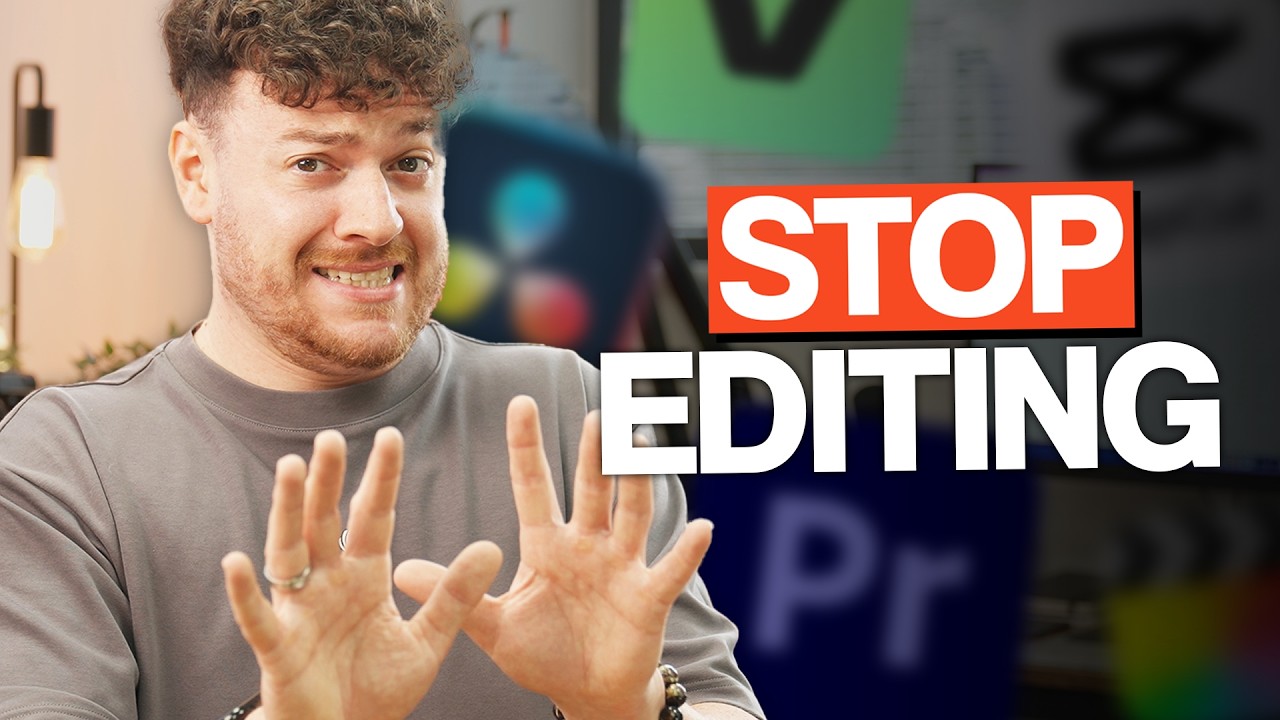
We'll come back to that a little bit later on. My opinion is that I think the biggest opportunity right now in the content space is to strip away this flashy style of editing, this hyper-edit-esque approach and actually go really slow. Go slow. The problem is when everyone's editing their videos in the same way, nothing on the feed stands out. Everything blends in.
At the peak of Mr. Beast's content on YouTube, for example, we kind of reached this stage which many people were calling the beastification of YouTube. Everybody's videos in this really strange period of about a year or so just felt the same. Very fast, flashy visuals, pop-ups, text, sound effects, music, intense zoom-ins. It was a lot.
There's a lot to take in. The problem with this style is that people pay less attention to the message, which I would argue is the most important part of your video, and they focus more on the visuals, the production quality, the aesthetics side of things, which in reality doesn't really move the needle for people. This style of editing becomes, in my opinion, more of a plaster on the problem as opposed to getting to the root cause and the foundational elements of why is my video not working? Very clever editing tends to mask poor ideas or badly written scripts or terrible hooks that will never engage people on their own, but they have to have these very flashy visuals and lots of different bells and whistles and lots of different elements to really grab people's attention to the point that they can't escape from watching your video. The way that I compare it, which is probably a little bit crude, is it's like putting very glittery, very colourful rainbow sprinkles on a pile of poo.
It looks a little bit better, but it's still a pile of poo. It's going to smell like poo, and if you're treading it, it's going to feel like poo. The problem with short film content is that people consume it and are entertained in that very short space of time, in that 30 seconds or 60 second moment, but actually they don't really do anything or take action after they've watched it. They just continue to scroll and to scroll and to scroll and to like another video and to leave another comment and to like another video and to maybe follow a brand and to scroll and scroll and scroll. It's just this endless cycle of this gambling style of addiction.
It's crazy. If you run a business or you're a professional who has a product or a service and you're trying to market that and promote it and to get leads, the latter is what you want people to do. You don't want people to just scroll and go, oh great, like. You want people to take action. You want people to download your lead bandit or to give you their email information so you can put them on your newsletter.
You know, you want people to take action to the point that they become a lead, that they become a hot lead. You convert them into a customer and they give you cash in the bank. That's what it's about, baby. However, here is the good news. I've noticed more recently that social media platforms are leaning into emotional resonance, not just fleeting moments of ephemeral attention.
Actually, the depth and the value and the message of the content, that's really what's important right now. If you really want to learn how to master social media as it is nowadays and you feel like your content hasn't been working as hard as it once did, if you click the first line or the second line, it will be one of them. In the description below, you'll be sent to a video that I created around how social media has changed so much and what you can do to really capitalize on this. Link will be in the description. Have a look right now at what is blowing up, okay?
We're seeing long-form YouTube videos come back, an hour-long podcast that people are consuming. We're seeing people starting to create slower-paced vlogs, fly-on-the-wall conversation videos, behind-the-scenes stuff, literally documenting what people get up to in their day. People want to emotionally connect. After so many years of consuming short-form, throwaway, ephemeral content of fleeting moments of attention, people are tired. I think people are exhausted.
And this trend of constant entertainment, I think, is actually wearing a lot of people down. I, myself, am feeling a little bit warm and thin. And that's because audiences now want connection. They don't want fleeting moments of dopamine. They don't want just quick moments of fun.
They want to, they want to connect with people. They want to hear people's stories again. We're almost going full circle from the old days of YouTube and vloggers to going through these crazy, fast-paced pieces of viral content to now saying, whoa, let's slow down a bit. Let's bring the social back into social media again. I want to connect with people.
I want to find my tribe. And the thing is here, guys, I'm not talking about my opinion or my perspective of what I think and what I feel. This is data. I'm looking at what is happening in the content scene, in the video world, in the marketing space right now. We're seeing some pretty big creators go through this shift.
Gary Vaynerchuk being one of them. He's just started a recent YouTube channel called DailyVee. It's only got a couple of videos on it, so it's got quite low subscribers compared to his multi-millions of subscribers on his bigger channels. But his content is much more steered towards daily vlogs and slowing things down and 10, 20, 30, 40-minute episodes that people can really sit down, have a coffee and just brew over. Alex Hormozi, again, one of the biggest entrepreneurial creators on the planet, video on him soon, is now starting to do 45-minute whiteboard breakdowns, three-hour webinars.
This is not the short-form content epidemic. People are really changing how they approach their videos now. Even people like Simon Squibb, one of, again, the most up-and-coming entrepreneurial creators on YouTube and LinkedIn especially right now, he's just created the most watched business video on YouTube ever. It's about three hours long. Two and a half hours long, maybe.
I can't remember the specific time. But it just shows you that diving into emotional resonance and depth and really nitty-gritty specific value is what people want. They don't want these quick moments of attention. They want to sit down with someone for an hour and really get to understand their brain again, really understand what they get up to. It's a really cool shift and I'm all for it.
All of these creators, and I know that I've only really mentioned a few, are going for not moments of fleeting attention. They're going for depth and value and resonance and emotional connection and time spent with people. That's what people want nowadays. They want that community. They want to find their tribe.
So I think slowing down and, you know, changing the pace a bit in your edits is actually really, really, really important. And you might have noticed it in my videos too recently. I'm not scripting them as much as I once did. They're not teleprompter high energy. Everything has a destination.
It's very much more exploratory. Let's kind of figure out where we go. Let's go off on a few side tangents. Let's just spend a bit of time together because I do genuinely believe that is the way forward. My opinion, though, is that you need to be with someone for about seven hours.
They need to consume your content and your marketing and be in your ecosystem for seven hours before they are willing to part ways with their hard-earned cash. That very fast-paced style of editing and really condensing your videos down and trying to maximize the amount of value that you have in 60 seconds or two or three or five minutes. I just think people are tired. I think people are so exhausted of consuming such fast content for so long without really getting any substantial value. I think people are just going back to the old age days of let's slow things the heck down.
Let's just chill out a bit, guys. Over the last five years, the approach has been fast cuts, fast transitions, fancy zoom-ins, pop-up effects, sound effects, music, intense drops to really bring you in. But I think we're past that now. And my opinion, based on data and what I'm seeing elsewhere, is that the slower paced approach, the much more value stacked approach, the slower pace, the deeper dive value is where people are going to go. Again, we're kind of just seeing it now with some of the best creators in the world shifting the way that they create their videos.
And not everybody's going to replicate that just yet. But I do believe in the next five years, we're going to slow things down again. And I think that there is no harm in starting to explore that approach to your own content. I think if you can give people depth and you can give people clarity and specificity around a problem that they want solved, you are perceived as the go-to person. You have a deeper level of trust with these people, as opposed to just a six-second reel and my top three tips on how to make great videos.
You know, a 35-minute workshop. Again, links in the description. Go and check it out. It's 35 minutes that we'll spend together where I teach you how to make videos for free. It's not about now thinking, well, what can I add?
It's about thinking, well, what can I cut? How can I remove a lot of the side tangents or the jargon or the waffle or the periods in between what I'm thinking and that dead space? So don't ask, well, what can I add as an editor? What can I add into my videos? What subtitles can I have?
What transitions can I add in? How can I make it look really, really, really cool? Start to think about, well, what can I cut? What can I remove the fluff around? That's really where I'd focus on.
So the natural next question you're probably thinking is, okay, well, what actually matters? And for me, that's going to be setting goals, setting purpose, being intentional with your content, delivering the highest value that you can to the point that your competitors and creators who are maybe in a similar niche, just don't do that because it's too much effort. It's too much work. Do the stuff other people aren't doing. Zig whilst other people zag.
I still think things like strong hook and creating curiosity and having a level of pace and structure and a very clear action to take and a thing to click, again, click that workshop down below if you want to check it out, is really, really important. I don't think you can get by without having that stuff. I'm not saying to just film a 40-minute video of yourself on an iPhone walking through the woods talking about what you think is helpful. I mean, still trim the fat, still cut a lot of the fluff out, condense it to the point that it's slow enough to dive deep, but fast enough to keep people interested. What I'm saying is don't just go for maximum attention, hyper-edits, huge maximum dopamine levels achieved.
We don't want that because that stuff isn't working as well as it once did, in my opinion. It means even down to things like structuring your content in a much more systematic way. The PAS, or the problem-agitate-solution framework, is a really great way to do that. Highlighting the problem as your hook, agitating that pain in the body of your content, and towards the end, highlighting the solution that drives this now, not fleeting moments, but gripping attention to the natural next step. Anybody can do that.
PAS, problem-agitate-solution. Check it out for yourself. It even means things like tapping into more stories, telling more narratives, really diving deep into how you deliver the narrative of this. What's the structure? What's the pace?
What's your delivery system, your delivery mechanism for how you display the value of your content? Maybe even more so from a presentation perspective, how do you stand in front of a camera and talk to an inanimate object by delivering the most energy and the most likability and being yourself as well, being your true authentic person? How do you do that as opposed to trying to mask it with all these bells and whistles and flashy visuals? For example, if I'm trying to explain a situation, I've got Axel Mosey behind me, I've got his new book behind me, I've got some cool pop-ups happening, some very cool sound effects, lots of text coming up on screen, lots of big captions. If I was just to remove all of that, I just said one word.
It gives you the context. It slows things down. The power of the message and the value that I deliver is so much greater because it's slow and because it's intentional and because it's purpose-driven as opposed to trying to put all the sparkly things around it to make it good. It's more about your message and how you present that's more important. Spending time with people.
I think that's really where we're at. Just think that people don't remember what you said or what you did, but people remember how you made them feel. And if you can spend time with people and you can establish that level of rapport and trust and relationship, that level of likability, that will do wonders for you in the long run. It's not a short-term thing, but in the long run that will really help. So spend time with people, slow things the hell down and just do things that people don't want to do.
No one wants to create a 40-minute video because it's a lot of work. Do that. So if you've spent the last short while trying to figure out how to edit like a pro and add all the bells and whistles, but you feel a little bit overwhelmed and isolated with how much there is to learn, I think we're entering a really good time. So don't beat yourself up. I would just say we're entering a good space now.
We're actually slowing things down. Gives you the ability to focus on the foundational stuff as opposed to all the flashy things on the side and the shiny things that you could dive into, but I don't really feel add to your content anymore. I think just treat the editing a little bit slower. I think it's a really good way to do it. So the best way forward from here is to come up with better ideas, learn how to write better scripts, really master how to deliver your videos by adding a bit of breathing room in and telling more in-depth stories, delivering greater value.
That is where I think the biggest opportunity for editing is, and that's the style that I'm starting to adopt myself. I'm Jack and I've created videos professionally over the last decade for over 400 different businesses. And the goal with my YouTube channel is to help you gain the confidence, the clarity, and the technical skills to be able to create videos yourself without the guesswork and that feeling of isolation. And there's a few ways that you can do that. One is by watching this video next about mastering your video hooks.
Again, slowing things down, being more intentional. That is a great one to go and watch. And if you're not subscribed to my YouTube channel already, go and check it out. Click subscribe. Join the creative community that we're building right here.
And I shall see you in the next video. Take it easy.